That sticky, heavy feeling indoors can be an all-too-familiar part of summer in the Midwest. While you expect high humidity outside, you shouldn’t have to live with it in your home. Excess indoor humidity can create serious issues with comfort, air quality, and even the structural integrity of your house. This problem goes beyond simple discomfort, impacting your family’s health and your home’s value.
Many homeowners believe an air conditioner is all they need to manage moisture levels. However, an AC’s primary job is to cool the air, and it often can’t keep up with our region’s persistent humidity. If you find your home feels damp and muggy even when the thermostat is set to a cool temperature, it may be time to develop a whole-home dehumidification strategy.
Why Humidity Is a Common Problem in the Midwest
Homeowners across Iowa, South Dakota, and Nebraska are no strangers to humidity. Our climate patterns contribute to high moisture levels, particularly during hot, humid summers. When warm, moisture-laden air from the south moves into the area, it creates the perfect recipe for muggy conditions that inevitably seep into our homes.
Modern houses, tightly sealed for energy efficiency, can sometimes make the problem worse. While great for retaining conditioned air, a tight building envelope also traps moisture from everyday activities like cooking, showering, and even breathing. Without a way to escape, this moisture builds up, creating a damp indoor environment that a standard HVAC system may struggle to control.
Signs Your Home May Have Excess Humidity
Your body and your house will often give you clear signals that the humidity is too high. Paying attention to these signs is the first step toward finding a lasting solution.
- A persistent sticky or clammy feeling on your skin
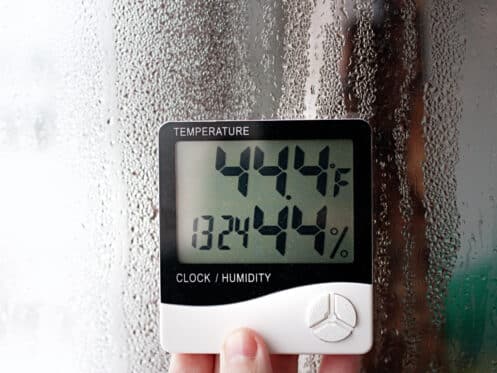
- Condensation or fog forming on the inside of windows
- A musty or mildew-like odor in basements or closets
- Visible mold or mildew on walls, ceilings, or in bathrooms
- An increase in allergy symptoms or respiratory irritation
- Warped wood floors, sticking doors, or peeling paint
Why Air Conditioners Don’t Always Remove Enough Humidity
While an air conditioner does remove some moisture from the air as a byproduct of the cooling process, it’s not a dedicated dehumidifier. Its main purpose is to lower the temperature. This distinction is crucial for understanding why your home can feel cool but also uncomfortably damp.
One common issue is short cycling. This happens when an AC, especially an oversized one, cools the house so quickly that it shuts off before it has a chance to pull significant amounts of water vapor from the air. The thermostat displays the target temperature, but the humidity remains.
What Is a Whole-Home Dehumidification Strategy?
A whole-home dehumidification strategy involves more than plugging in a portable device. It’s a comprehensive approach that uses a dedicated system integrated directly into your home’s HVAC ductwork. This central dehumidifier works with your furnace and air conditioner to manage moisture levels throughout your entire house, not just in one room.
The system actively pulls air from every room through the return ducts, removes the excess moisture, and then sends the drier, ideal air back out through the supply vents. This continuous process ensures consistent and precise humidity control in every corner of your home, from the basement to the bedrooms.
Benefits of Whole-Home Dehumidification
Implementing a whole-home dehumidification system offers significant advantages that enhance your quality of life and the longevity of your home. By maintaining optimal humidity levels, you create a healthier, more comfortable, and more efficient living space.
- Improved indoor environment and cooler-feeling air
- Better air quality by inhibiting allergens
- Reduced risk of mold and mildew
- Protection for your home and belongings
- Potential energy savings on cooling bills
Homes That Benefit Most From Whole-Home Dehumidifiers
While any home in the Midwest can benefit from better humidity control, certain types of properties are especially prone to moisture issues. If your home fits one of the following descriptions, a whole-home dehumidifier could be a particularly valuable investment.
- Homes with basements or finished lower levels
- Larger homes where portable units are inefficient
- Newer, tightly sealed homes
- Properties with a history of moisture problems
- Households with allergy or asthma sufferers
Components of an Effective Humidity Control Strategy
Achieving total indoor comfort requires a multifaceted approach. A whole-home dehumidifier is the cornerstone of the strategy, but other elements play a supporting role in keeping your home’s moisture levels in check.
An effective strategy starts with installing a professional-grade whole-house dehumidifier. Beyond that, ensuring proper ventilation with bathroom and kitchen exhaust fans helps remove moisture at its source. Regular HVAC maintenance is also key, as a clean, efficient AC will better remove humidity.
When to Consider a Whole-Home Dehumidifier
Many homeowners start with small, portable dehumidifiers to tackle a damp basement or a single humid room. While these units can provide temporary relief in a small area, they are often not a practical or effective long-term solution for an entire house. These devices require constant emptying, can be noisy, and use significant energy for the limited area they cover.
It’s time to consider a whole-home solution when you notice humidity issues in multiple areas of your house, when portable units can’t keep up, or when you want a quiet, low-maintenance system. It’s an investment in your home’s health and your family’s comfort, providing a permanent solution to persistent humidity problems.
Improve Indoor Comfort With Kalins Indoor Comfort
For over a century, Kalins Indoor Comfort has been dedicated to providing superior home comfort solutions. If you’re tired of living in a home that feels damp and uncomfortable, our team has the expertise to help. We can perform a thorough assessment of your home’s indoor air quality and design a whole-home dehumidification strategy tailored to your specific needs.
For professional indoor air quality services in Iowa, South Dakota, and Nebraska, trust the experienced technicians at Kalins Indoor Comfort. Contact us today to schedule a consultation.
Frequently Asked Questions
For optimal comfort and health, the ideal indoor relative humidity level is generally between 30% and 50%. Levels above 50% can promote the growth of mold and dust mites, while levels below 30% can lead to dry skin, irritated sinuses, and static electricity.
This common problem often occurs because the air conditioner’s primary function is to cool, not dehumidify. If your AC is oversized or short cycling, it may cool the air to the thermostat’s setpoint without running long enough to remove enough moisture, leaving the air feeling cool but clammy.
For controlling humidity throughout an entire house, whole-home dehumidifiers are far superior. They are more effective, more energy-efficient, and operate quietly and automatically through your existing ductwork. Portable units are best suited for temporary use in a single room or small space.
Yes. Mold spores are naturally present in the air, and they need moisture to grow and multiply. An indoor humidity level above 50% creates the perfect breeding ground for mold on surfaces like walls, wood, and fabric, which can lead to property damage and health concerns.
For many homeowners in our region, a whole-home dehumidifier is a worthwhile investment. Given our intensely humid summers, these systems provide a powerful solution for improving indoor environment, protecting your home from moisture damage, and creating a healthier living environment for your family.